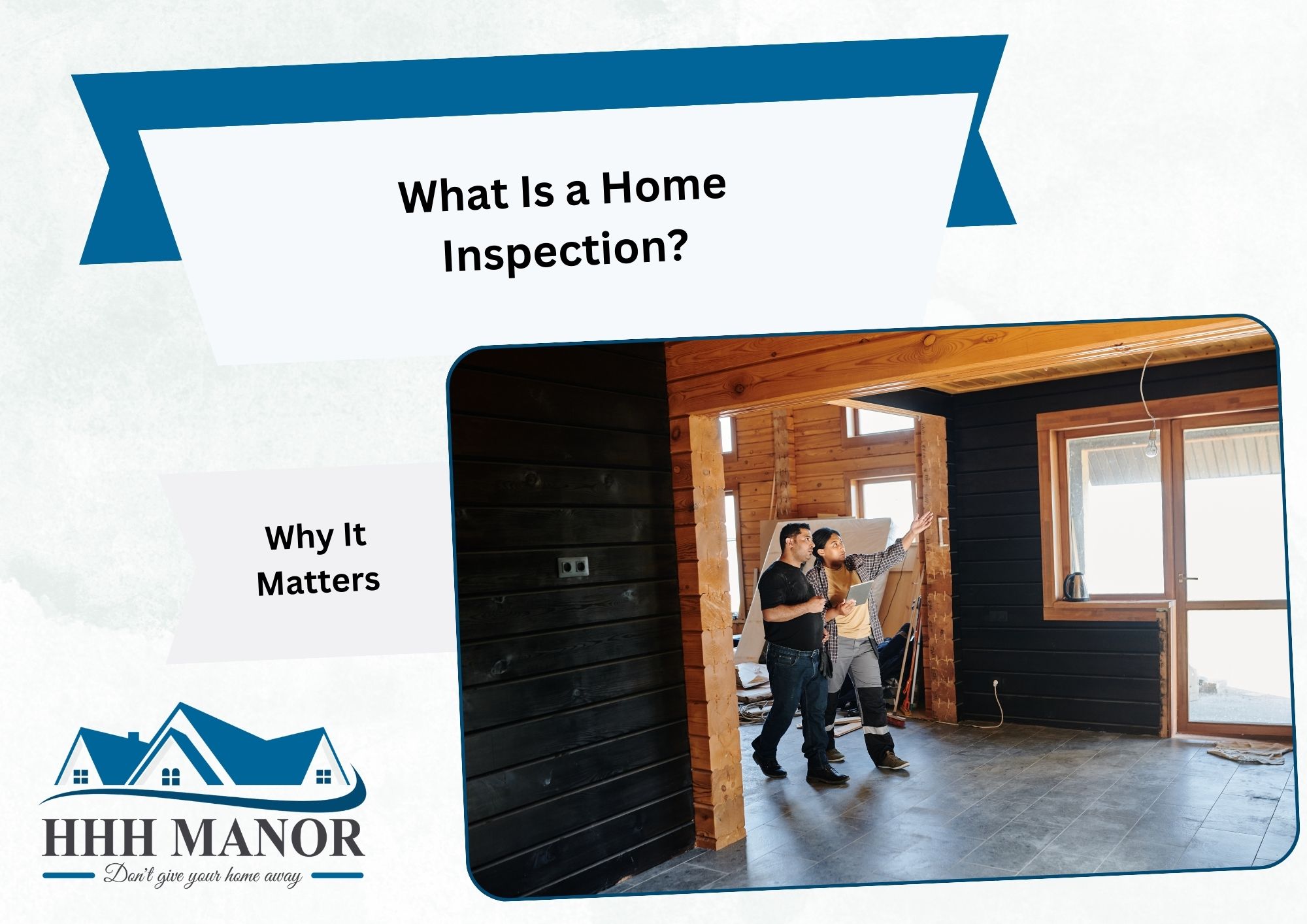
Why It Matters—Especially in Foreclosures, Probate, and Properties with Liens
Whether you’re buying a traditional home or one tied up in foreclosure, probate, or liens, one crucial step you should never skip is the home inspection. It’s more than a formality—it’s your best chance to understand what you’re actually buying before you sign on the dotted line.
At HHH Manor Real Estate, we specialize in helping clients navigate complex real estate transactions. Let’s break down what a home inspection is, how it works, and why it’s especially important in distressed or inherited property sales.
What Is a Home Inspection?
A home inspection is a professional, visual examination of a property’s physical structure and major systems. It’s typically ordered by the buyer after a seller accepts their offer and is conducted by a licensed home inspector.
The inspection covers the condition of:
- Roof
- Foundation and structure
- Electrical systems
- Plumbing
- HVAC (heating, ventilation, and air conditioning)
- Appliances
- Windows, doors, and more
After the inspection, you’ll receive a detailed report outlining any issues—big or small.
Why It’s Especially Important in Foreclosures, Probate, and Lien-Related Sales
Foreclosures:
Many foreclosed homes have been vacant or poorly maintained. Some may have suffered intentional damage by former owners or experienced serious neglect. A home inspection can help you uncover:
- Hidden mold or water damage
- Unsafe wiring or plumbing
- Pest infestations
- Structural concerns
Note: Some bank-owned properties are sold as-is with no repairs, but you still have the right to inspect and walk away if the findings are serious.
Probate Sales:
Heirs may not know the full history or condition of the home. In some cases, the property hasn’t been updated in decades. A home inspection will:
- Reveal what repairs are needed before or after purchase
- Help you budget for renovations
- Protect you from surprise expenses after closing
Homes with Liens:
Liens often stem from unpaid contractor work or code violations. A home inspection can help you spot:
- Unfinished or unpermitted work
- Safety issues that may have triggered liens in the first place
- Maintenance that was deferred due to financial hardship
Can You Negotiate After a Home Inspection?
Absolutely. While many distressed properties are sold as-is, your inspection findings give you the power to:
- Renegotiate the price
- Request credits at closing
- Walk away from the deal if the repairs are too extensive
What to Look for in a Home Inspector
Choose a licensed, experienced inspector—preferably one with knowledge of distressed properties. Ask:
- Do they have experience inspecting foreclosures or estate properties?
- Do they include photos and recommendations in their report?
- Can they inspect for mold, termites, or structural integrity?
Final Thoughts
A home inspection is your due diligence, your protection, and your peace of mind—especially when buying properties with legal or financial baggage. It’s not just about what you see on the surface; it’s about understanding what lies beneath.
At HHH Manor Real Estate, we help buyers ask the right questions, connect with trusted inspectors, and make smart, informed decisions.Ready to start your home search—or need help understanding what to inspect before you buy? Let’s talk.
Explore more articles on our blog for guidance on foreclosures, probate sales, and homes with liens in South Florida.